


The brutal and simultaneously “libertarian” face of Carnival is not a festive deviation enjoyed briefly by Western elites.
It is the permanent condition of a world that, no matter how hard it tries to present itself as rational, moral, institutionally sound, is — quite literally — built upon a subsoil of decay, self-indulgence, and an irresistible pull toward the dark.
And this decay does not begin with Jeffrey Epstein.
Epstein is merely its clearest, boldest, most thoroughly documented expression — the culmination of an arc that began decades earlier, when the first hairline cracks appeared on the bourgeois façade of the West, cracks that looked insignificant at first glance but revealed how fragile that porcelain surface truly was.
The erosion of bourgeois dignity — for decades the foundation of Western order — first unfolded in the United States during the hippie movement, when “tidy America” was forced to look in the mirror and see, even momentarily, the chaos hidden under its carpet.
Then came France, in the late 1960s, when the old bourgeoisie began to creak — not from poverty or existential anxiety, but from moral exhaustion, arrogance, and a kind of cultural ennui endlessly accompanied by “a wine for every dish” and decadent excursions into the shadowy corners of the Bois de Boulogne, where the Empire of Morality took off its mask every night.
A little further north, German respectability — so disciplined, so stable, so “proper” — sent, for the first time in post-war Europe, water cannons, rubber bullets, and a miniature army of riot police against the communes of St. Pauli. Against young people armed not with weapons but with roses. The system bared its teeth not against violence — violence it knows how to manage — but against dissent.
And then came the great ignition — full of rage, momentum, romanticism, and naïveté — in Paris.
May ’68 and the Epstein dossier appear, at first sight, wholly unrelated: the first, an explosion of youthful rebellion; the second, a subterranean emblem of an elite that has stopped feeling ashamed.
Yet they form the two endpoints of the same arch of decline.
The moment bourgeois dignity collapsed — as a moral code, as restraint, as a boundary — the West began sliding into an increasingly permissive version of itself; a version where everything is possible, everything is tolerated, and nothing — absolutely nothing — is truly accountable.
May ’68 was born out of the need to break something: to break authority, to break silence, to break the hypocritical safety of a society that believed prosperity alone generated meaning.
The young thought they were pushing History a few millimetres closer to freedom; but what they ultimately pushed were the boundaries of the bourgeoisie itself — which, within a few decades, not only absorbed the rebellion but converted it into a commercial aesthetic: radical symbols became fashion, revolution became lifestyle, and the once-rebellious turned into professors, publishers, ministers, executives, opinion-makers — stewards of a class that learned to metabolise every threat and return it as commodity.
That is why May ’68 didn’t create a new era — it created the brokers of progress: figures like Jean-Claude Petit and Joschka Fischer who, thirty years later, as Green ministers, voted for the very measures they had once sworn to fight.
And somewhere along that continuum lies the thread that links the romantic defiance of ’68 to the predatory architecture of power revealed in the Epstein file.
Because this affair is not a “scandal”.
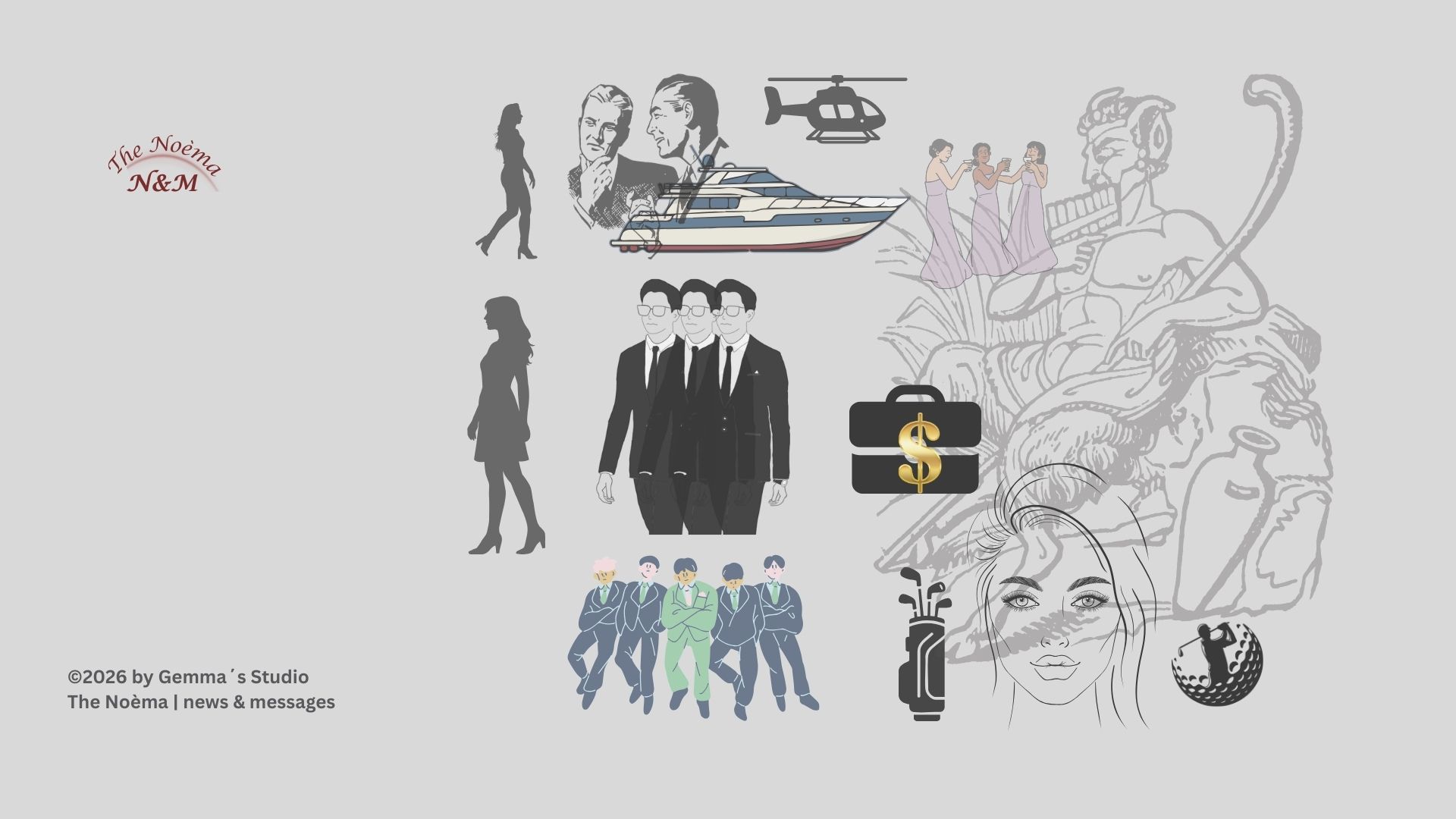
It is an anatomy of a system that operates in twilight — between money, politics, corporate circuits, lobbying networks, and institutional tolerance; a system in which the elite no longer needs to hide — not because there is no crime, but because there are no consequences.
Epstein was not the anomaly.
He was the conclusion — the inevitable outcome of an ecosystem in which the powerful act as though moral obligation does not apply to them; where legality functions as a polite suggestion rather than a rule.
And the tragedy is not the existence of darkness.
The tragedy is that the West learned to present it as “the unavoidable cost” of progress. That genuine corruption — the corruption of the powerful, not the petty rule-bending of small businesses — is now treated as the oxygen of the neoliberal order, repackaged as “development policy”.
From May ’68 to Epstein the distance is not vast.
It is a single line.
A single arc.
An arch of decay stretching from youthful rebellion to the managerial handling of decline by the very people who once vowed to overthrow it.
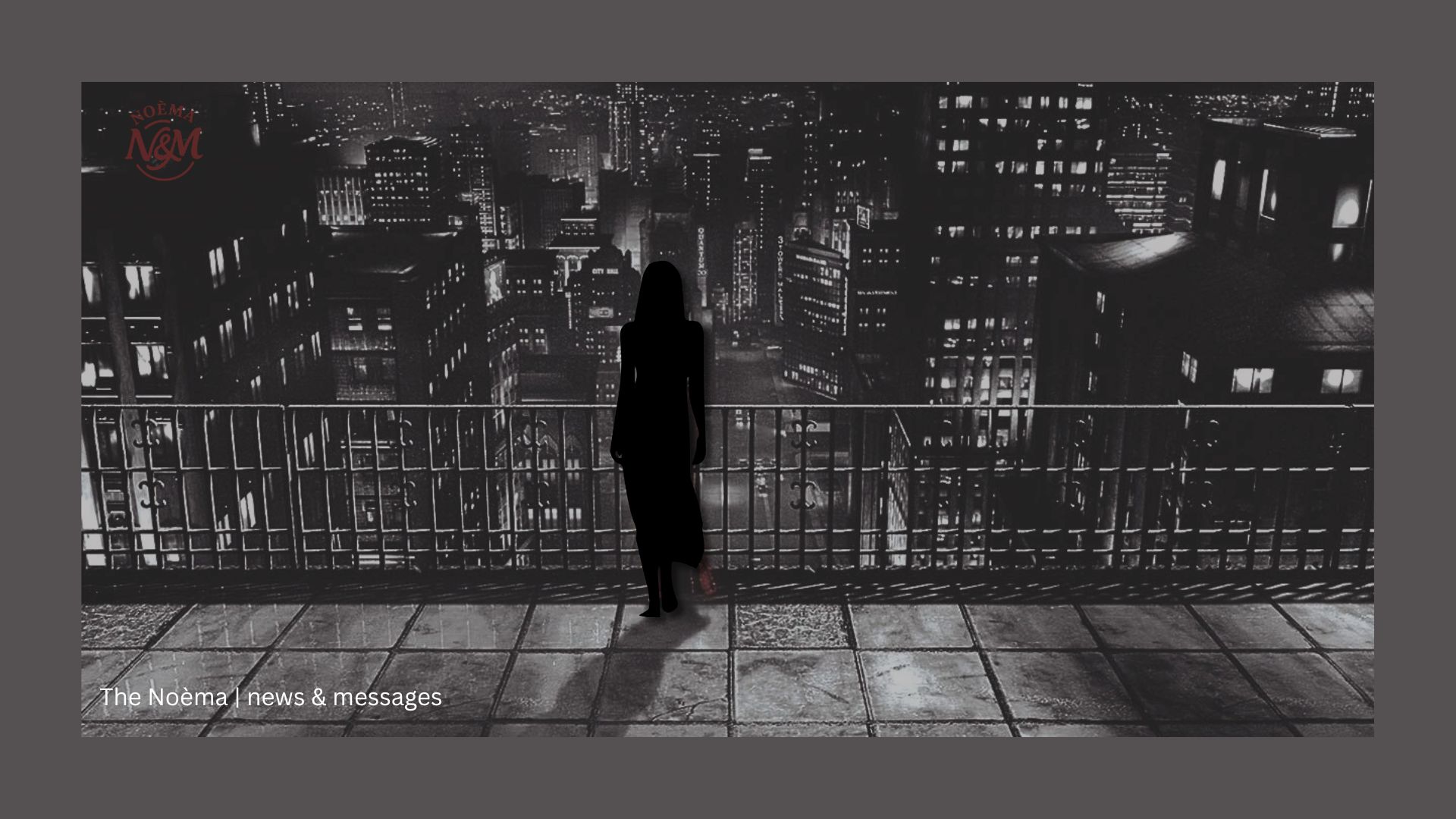
Epstein I — The Bunga-Bunga Prelude
The “Bunga-Bunga” parties of cavaliere Silvio Berlusconi were, in hindsight, Europe’s first unmistakable prelude to systemic rot. Long before they became an international punchline, they weren’t merely the excesses of a pleasure-seeking statesman.
They were the early alarm bell signalling that the West was becoming accustomed to an idea once unthinkable: that power no longer needed to feel ashamed.
Those gatherings of influence, protection networks, luxury villas, revolving doors of fixers, celebrities, and under-age girls thrust into a world that was not theirs — all of that formed, long before the Epstein bomb exploded, the first mirror of a Europe losing its sense of proportion.
It wasn’t gossip. It was a cultural symptom: institutional power demanding understanding, tolerance, and moral leniency. As if decay was a right.
And this is where the West began playing with fire — not because certain leaders misbehaved, but because entire societies started to “not see”.
Epstein did not fall from the sky. He was the natural next step for a Europe and an America already familiar with the flavour of impunity.
And at the centre of it all: the victims
Whether adults chasing thrill, adventure, and the intoxication of wealth and power, or minors confronted with “offers” of money, opportunity, and ascent, every one of them retains — or should retain — the right to refuse, retract, or draw boundaries, even in cases of initially willing participation that, upon reflection, felt degrading, dehumanising, or coercive.
In a world where economic pressure functions as daily blackmail, “choice” is not always choice.
Often it resembles a smile given out of fear, a nod made out of necessity, or a silence purchased for the price of survival.
The system loves to describe these young people as “independent adults making their own decisions”.
Anyone who has lived anywhere near the hard kernel of social inequality knows better: there is agency, yes — but there is also condition.
There is consent — but also need.
There is choice — but also coercion without violence: the coercion of wealth.
This is the ethical minefield that binds May ’68 to Epstein: the young once rose to shatter bourgeois hypocrisy, only for that same bourgeois class to reintroduce — with a shinier wrapper — the same old exploitation of the vulnerable.
Not in factories this time, but in private jets, villas, and dimly lit rooms where life-changing decisions are made under chandeliers and in the shadows of networks.
And perhaps — this is the darkest thought of the era — we are not witnessing the fall of the West but its Revelation: a system that no longer produces hope, content merely to manage its rotting basement.
Quietly.
Methodically.
Technocratically.
Without a trace of self-awareness.
Real power is no longer found in the light.
It operates underground — as the Epstein case made painfully, unambiguously clear.