


When sound rediscovers body, roots, and meaning
There is something that binds all seemingly different music scenes together — across genres, techniques, and geographies.It is need.
The human need to return *inside* music — not facing it as a consumer, but inhabiting it, as a body that vibrates.
When rock truly works, it is not concerned with amplifier tone or distortion pedals. It cares about the moment when a voice cracks just before becoming a scream; about the look in the crowd when someone recognizes themselves inside the noise. This is not nostalgia. It is survival. Rock reminds you that anger, when left unspoken, turns into silence — and silence becomes weight.
Reggae, on the other hand, never rushes. It carries time differently. Each rhythmic step feels like the breathing of someone who has learned how to endure. This is not music of escape; it is music of **resilience**. It makes you move not in order to forget, but in order to remain standing. Its power lies precisely there: in a collective calm that conceals resistance.
In Arab and African scenes, sound becomes a narrative of everyday life. There is no technical exhibitionism — only story. Voices carrying city pressure, family, streets, survival. This music does not ask to become “global.” It becomes global because it is honest. And that is why it is recognized everywhere.
Even in electronic music — and in what is often dismissed as “pop” — where detachment once dominated, the human trace returns. Mistakes. Breaths. Voices from the crowd. The club stops being a place of escape and becomes a place of encounter. You no longer dance to disappear, but to notice who is dancing beside you.
Perhaps this is the true musical challenge of 2026: not to impress, but to **remain**. To give you something that does not end when the track fades out. Something that stays in the body — a bit of sweat, a bit of emotion, a bit of truth.
And then you realize that the real question is not whether music is moving forward or backward. The question is whether it **meets us** where we truly are.
Music does not always change with noise. Some years, it changes almost silently — as if stepping back from its own reflection to remember why it began. 2026 feels like such a year, arriving with momentum built long before it appears. Not because it creates a new genre, but because it seems to restore something older and deeper: the relationship between sound, body, memory, and language.
Starting from the pop landscape, Dua Lipa — almost unintentionally — functioned as a point of departure. With *Radical Optimism* (2024), she did not attempt to outsmart the algorithm; she simply walked past it. She did not create an album meant to be consumed in fifteen-second fragments, but one that withstands duration, orchestration, simplicity. A clean voice, rhythms without overload, songs that have room to breathe. Not a return to the past, but an aesthetic stance.
It became clear that this is not about “less pop.” It is about **less plastic**. A return to melody, to roots, to the body — to dance not as consumption, but as ritual. Pop did not die; it merely shed part of its anxiety about success.
Alongside it emerges a generation of artists who do not shout “look at me,” but persistently whisper “listen to me.” Troye Sivan brings a queer pop sensibility shaped by a decade of rights-based discourse in the Western youth imagination, merging house rhythms with embodied freedom. RAYE allows soul and jazz to bleed into pop forms like an open wound. Caroline Polachek experiments with vocal heights and avant melodies that ask permission from no one. This is pop that can withstand intensity — because it needs it.
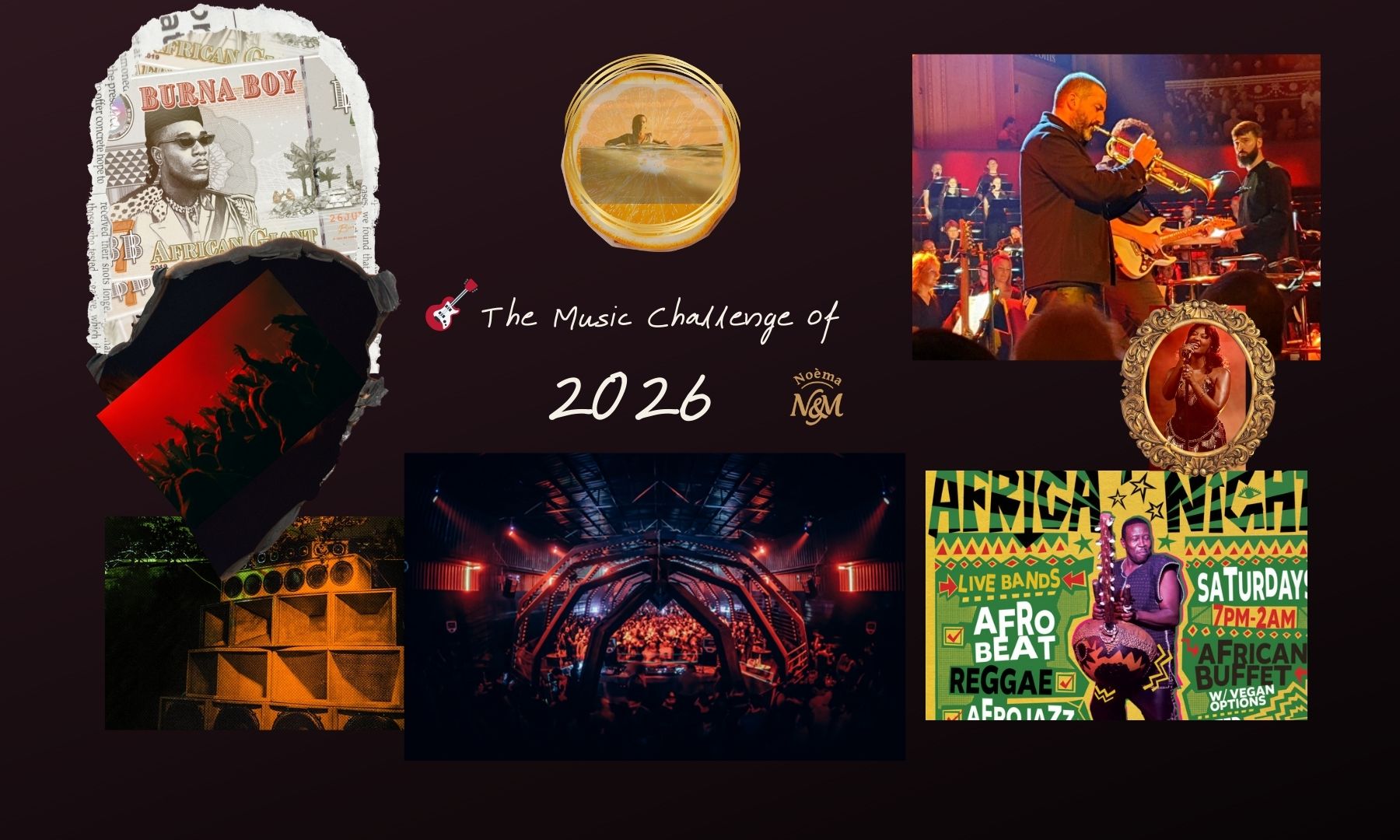
At the same time, in another current — more underground yet equally powerful — music ceases to function as background and becomes space. Ibrahim Maalouf does not merely compose; he opens fields. His trumpet bridges East and West without folklore. Jazz converses with maqams. Electronic elements exist to support breathing, not to suffocate it. Tracks like *S3NS* or *Beirut* do not fill space — they charge it. They play in order to remain.
In a world of constant distraction, music of concentration rises. Nils Frahm imposes silence through piano and modular systems. Floating Points balances jazz intellect with club heart. These are sounds that refuse the background. They demand time — and reward those who offer it.
Then, almost explosively, the Arab and Mediterranean scene moves from the periphery to the center. From Morocco to Tunisia, the Maghreb no longer asks to be explained. ElGrandeToto, Marwan Moussa, Shkoon construct urban narratives rooted in local identity. Trap with oud, rai with beats, lyrics shaped by contemporary youth. Not as “world music,” but as modern metropolitan culture — music that dances, thinks, and claims space.
Within all this, reggae returns not as a relaxed postcard, but as a rhythmic philosophy of resistance. Not from the Caribbean, but from Africa. Burna Boy, Tems, Black Sherif carry reggae, dub, afrobeats, gospel, and trap without losing identity. Roots, club impact, political voice. This energy does not soothe — it mobilizes.
And then, like an eternal return, rock lifts its head again. Not as a genre, but as a stance. Fontaines D.C. sing the political and existential anxieties of Europe. IDLES transform rage into empathy. Yard Act use spoken word and satire to articulate class pressure and everyday suffocation. Rock does not promise revolution. It simply shows us how we live.
Even club culture changes character. From a tool of escape, it becomes a collective experience. Fred again.. with live sets full of voices and memory; Peggy Gou, Overmono, The Blessed Madonna — all point to the same thing: the club is no longer escapism. It is a place of connection.
Yes, AI is entering music. But the artists who stand out are those who use it as a tool, not as a substitute. Audiences recognize the human trace — and they ask for it again.
In 2026, at least in music, we seem to be entering a year of aesthetic re-grounding. Not more noise, but more meaning. Not endless scrolling. Not empty beats.
And if music is the soundtrack of our era, then perhaps — for the first time in a long while — it truly deserves a press of *play*. 🎸